What Is an Electric Hoist Scaffold?
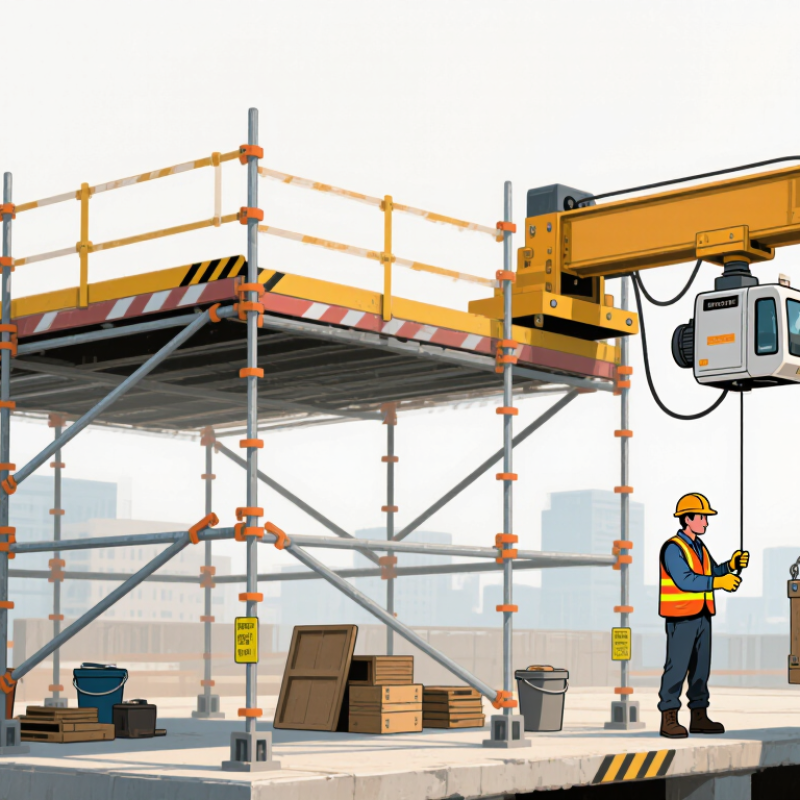
An Electric Hoist Scaffold combines a supported work platform with a powered hoist that raises or lowers materials. Instead of carrying every bucket, tool, or panel up by hand, workers can move loads between ground level and the platform. Picture a hoist lifting a compact crate beside a scaffold bay. The arrangement can save effort, but it also adds moving parts and requires careful planning.
For this overview, “Jordan Reed” is an illustrative access-equipment specialist, not a quoted real-world source. His practical reminder is: “A hoist helps move the load; it does not make an overloaded platform safe.” That distinction matters. The scaffold, hoist, attachment points, and materials must be suitable for the intended setup. Operators also need clear communication, controlled loading, and checks for visible wear or damage. Small details count. A swinging load can strike a rail; a poorly placed cable can snag.
This guide explains what an Electric Hoist Scaffold is, how its main components work, and where it may be useful. It also considers basic selection and inspection questions. Not every site benefits from this arrangement. Access conditions, load shape, and available space can change the answer. Some judgments still depend on the actual site. That is worth admitting. A short description cannot replace equipment instructions or a competent, site-specific assessment.
Definition and Purpose of an Electric Hoist Scaffold
An electric hoist scaffold is a scaffold work area paired with an electrically powered hoist for moving materials. The scaffold provides a platform for workers, while the hoist raises or lowers tools and supplies. They serve different functions. A hoist does not automatically make a scaffold suitable for lifting people; use only equipment designed and rated for that purpose.
Its purpose is to reduce repeated manual carrying and keep materials near the work area. For example, a crew repairing an upper wall might raise buckets, fasteners, or compact tools from ground level. This can save effort and improve workflow, but it does not remove lifting hazards. Wind, uneven loads, damaged cables, and weak attachment points can make an ordinary lift unsafe. Not a shortcut.
Tips: Check both equipment ratings against the heaviest planned load. Confirm the hoist is mounted to a support designed for its forces. Inspect hooks, cables, controls, and emergency stops before use. Keep people clear of suspended loads, and follow equipment instructions and site procedures. Stop if movement looks unusual. A quick visual check helps, but it cannot replace a competent inspection.
What Is an Electric Hoist Scaffold?
An electric hoist scaffold combines a scaffold platform for access with a powered hoist for lifting materials. The hoist’s rated capacity is equipment-specific; always check its nameplate and follow the scaffold and hoist manufacturer’s instructions.
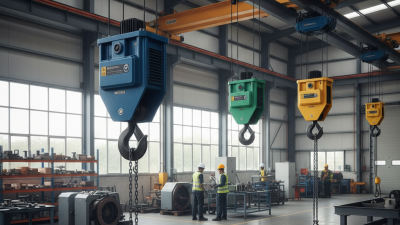
Example rated-load classes shown for illustration; available ratings vary by hoist model. These values are not the scaffold’s load capacity.
Main Components and Their Functions
What Is an Electric Hoist Scaffold?
Main Components and Their Functions
An electric hoist scaffold uses powered lifting units to raise or lower a suspended work platform. The platform carries workers, tools, and materials; guardrails help prevent falls at its edges. Suspension ropes connect the platform to overhead support points, while end stirrups keep the deck aligned. Each hoist typically contains a motor, braking system, and rope-feed mechanism. The motor moves the platform. The brake holds it when movement stops. A control pendant lets the operator manage travel from the platform, and a power cable supplies electricity. Small parts matter. I still find cable routing easy to overlook, though it can affect safe movement.
Safety devices provide another layer of protection. Overspeed or secondary safety locks can stop a platform if its main suspension system fails, while limit switches help prevent travel beyond set points. OSHA’s construction scaffold standard, 29 CFR 1926.451, requires scaffolds to support their own weight and at least four times their maximum intended load. It also specifies a six-times load capacity for suspension ropes. These figures are design requirements, not permission to overload the platform.
Before work, check ropes for damage, confirm the hoists move evenly, and test controls and brakes. OSHA also calls for competent-person inspection before each work shift and after events that could affect structural integrity. A missed detail can matter. The checklist is only useful when someone actually checks.
How an Electric Hoist Scaffold Operates
An electric hoist scaffold uses a powered hoist to raise or lower a work platform along suspension ropes or guide structures. In a suspended setup, an operator uses a pendant control; the motor drives a traction mechanism or drum, moving the platform upward or downward. Brakes hold it when movement stops, while limit switches help prevent travel beyond set points. Small movements matter. A platform can tilt if its hoists do not travel evenly, so operators watch the deck, ropes, and load as it moves.
Before use, crews check the hoists, wire ropes, connections, controls, and emergency stops, then keep materials within the platform’s rated capacity. OSHA’s scaffold standard requires scaffold components to support their own weight and at least four times the maximum intended load. The figure is a design requirement, not permission to overload. The U.S. Bureau of Labor Statistics recorded 1,075 fatal work injuries in the construction industry in 2023; that figure covers construction broadly, not scaffold incidents alone. A hoist’s smooth ride can feel reassuring, but it does not prove the setup is sound. Daily checks and level movement still need attention.
Common Types and Configurations
An electric hoist scaffold uses powered lifting equipment to raise or lower a work platform. The common suspended configuration hangs from roof-level supports and uses two hoists, one at each end. Workers can control the platform’s height while accessing façades, bridge undersides, or tall interior spaces. A single-point setup supports a compact work cage, while multi-point systems use several suspension lines for longer platforms. Choose the arrangement around the work area, platform length, and load—not convenience alone.
Hoists generally use either a traction mechanism, which grips a moving wire rope, or a drum mechanism, which winds rope around a rotating drum. Traction units can suit long travel distances; drum units keep rope stored on the machine. Rooftop support may use engineered outrigger beams or approved parapet clamps.
Details matter. OSHA’s construction scaffold standard requires scaffold components to support their own weight plus at least four times the maximum intended load; suspension ropes must support at least six times that load (29 CFR 1926.451). These are design requirements, not permission to guess at capacity.
A setup can look level and still be poorly balanced. That deserves a second check.
Applications and Essential Safety Considerations
What Is an Electric Hoist Scaffold?
Applications and Essential Safety Considerations
An electric hoist scaffold combines a working platform with a powered lifting device. It can help move tools and materials to elevated work areas, such as building façades, industrial maintenance sites, and large interior spaces. A hoist may reduce repeated manual carrying, but it does not make a scaffold safer by itself. The platform, hoist, and supporting structure must be suitable for the intended load and task. Check the equipment instructions and rated capacities before use.
Safety starts before the motor runs. A competent person should inspect the scaffold, connections, hoist, power supply, and controls, including emergency stopping features. Confirm that the base is stable and the platform is secured. Keep people clear of suspended loads, and never lift above the rated capacity. Small details matter. A snagged cable or shifting load can create sudden movement. Operators should receive task-specific training and keep communication clear when visibility is limited. Wind, wet surfaces, damaged components, or an uneven setup may call for stopping work. In practice, teams can miss small changes during a busy shift, so repeat checks are worthwhile. Follow the equipment maker’s instructions and applicable workplace requirements for setup, operation, and maintenance.